The Amazon and the Center

The Amazon region of South America is home to the world's largest river, tropical forest, and concentration of plant and animal species. Appreciation for this area's ecology and diverse human societies is growing, but the extent of Amazon forest burning and degradation is still very high. The causes and effects of Amazon deforestation are found both in and outside the region. Addressing these problems will, therefore, require inspiration and creative action by people in the Amazon and beyond.

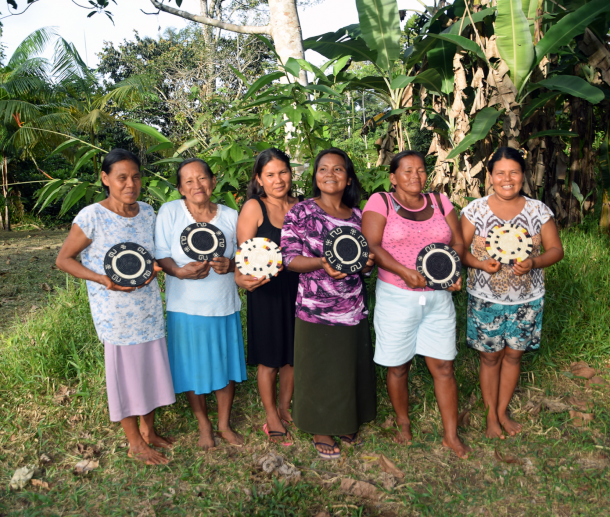
The mission of the Center for Amazon Community Ecology is to promote the understanding, conservation and sustainable development of human and other biological communities in the Amazon region. Our three strategies are research, community support and education. One of our main goals is to study the ecology and develop the sustainable harvest and marketing of non-timber forest products such as fruits, fibers, resins, and oils. We also work with indigenous and other forest peoples to sustain local resources and support their communities. See More

Amazon dog collars and leashes now available at Wiscoy for Animals

Dog with Amazon white and red Amazon dog collar Dusty with Amazon dog collar
Amazon dog collar

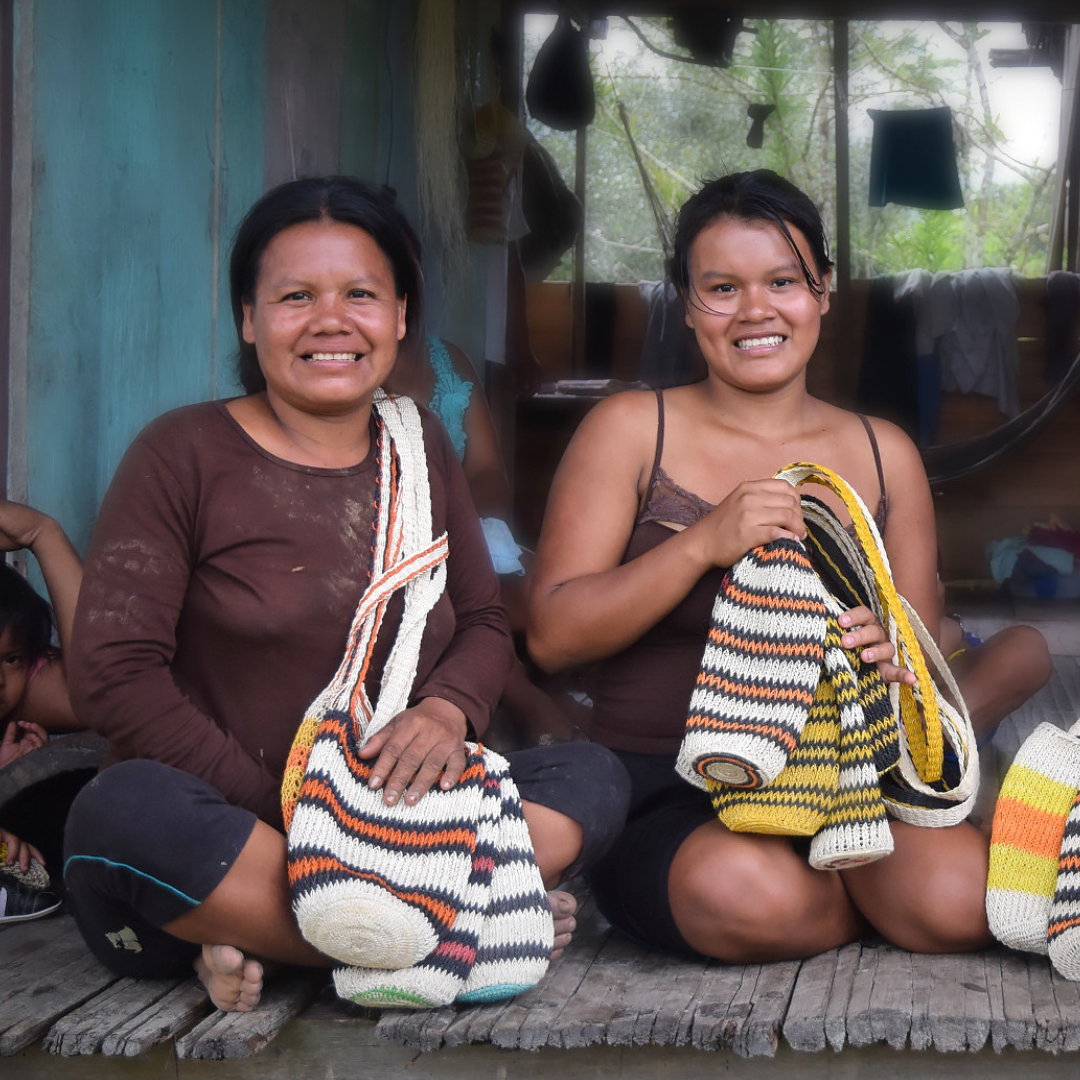
CACE has begun a partnership with the locally owned pet supply store Wiscoy for Animals to offer the first models of the Amazon dog collars and leashes at their store at 424 West Aaron Drive in State College, PA. These products are made by native artisans from the Bora native village of Brillo Nuevo in the Ampiyacu River region of the Peruvian Amazon. Each item has been woven with the strong natural chambira palm fiber with eight designs of jungle snakes - most with all natural plant dyes. Wiscoy owner Wanda Crosby welcomed the Center to its Ice Cream social in September to see how the models looked on a wide range of sizes and types of dogs. Visit the CACE page on Facebook to see photos of the Amazon dog collars, Amazon dog leashes and both products being modeled by friendly dogs.

The collars are available in three widths (narrow - 1/2 inch, medium - 3/4 inch, wide - 1 inch) in two lengths. Leashes are available in the same three widths, and all are five foot long. In addition to Wiscoy, some models may also be purchased at upcoming craft fairs and from the Center.

Center making progress with copal and craft projects in Peru

Brillo Nuevo artisan with chambira palm fiber dog leash. Photo by Campbell Plowden/CACE
Bora woodsman holding leaf from copal tree in resin study. Photo by Campbell Plowden/CACE
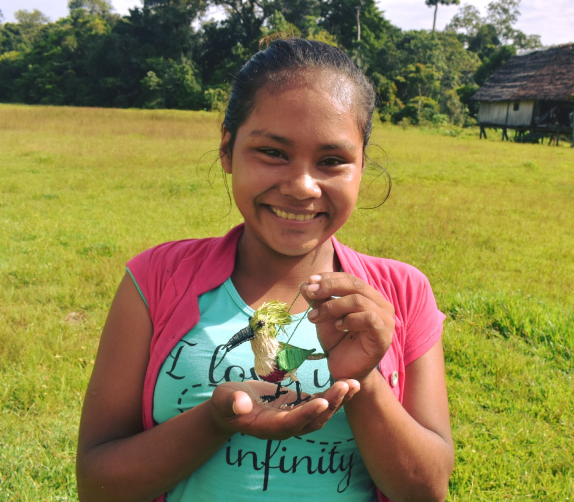
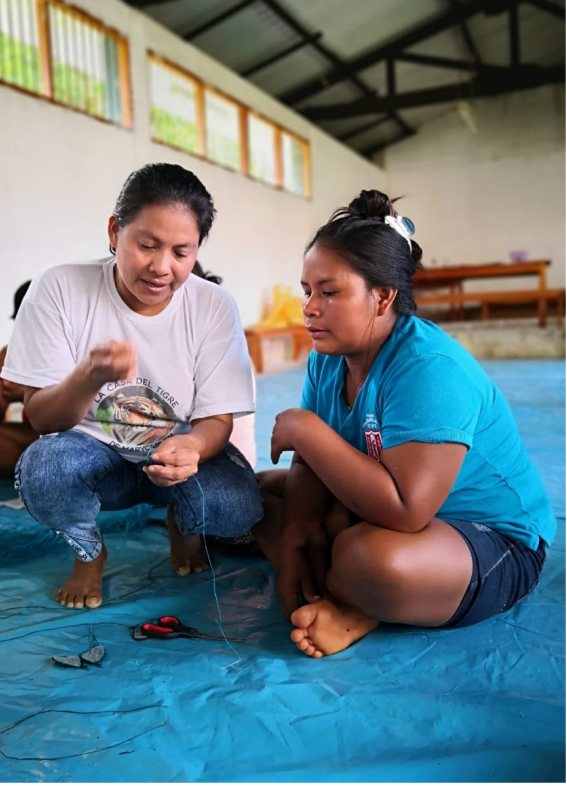
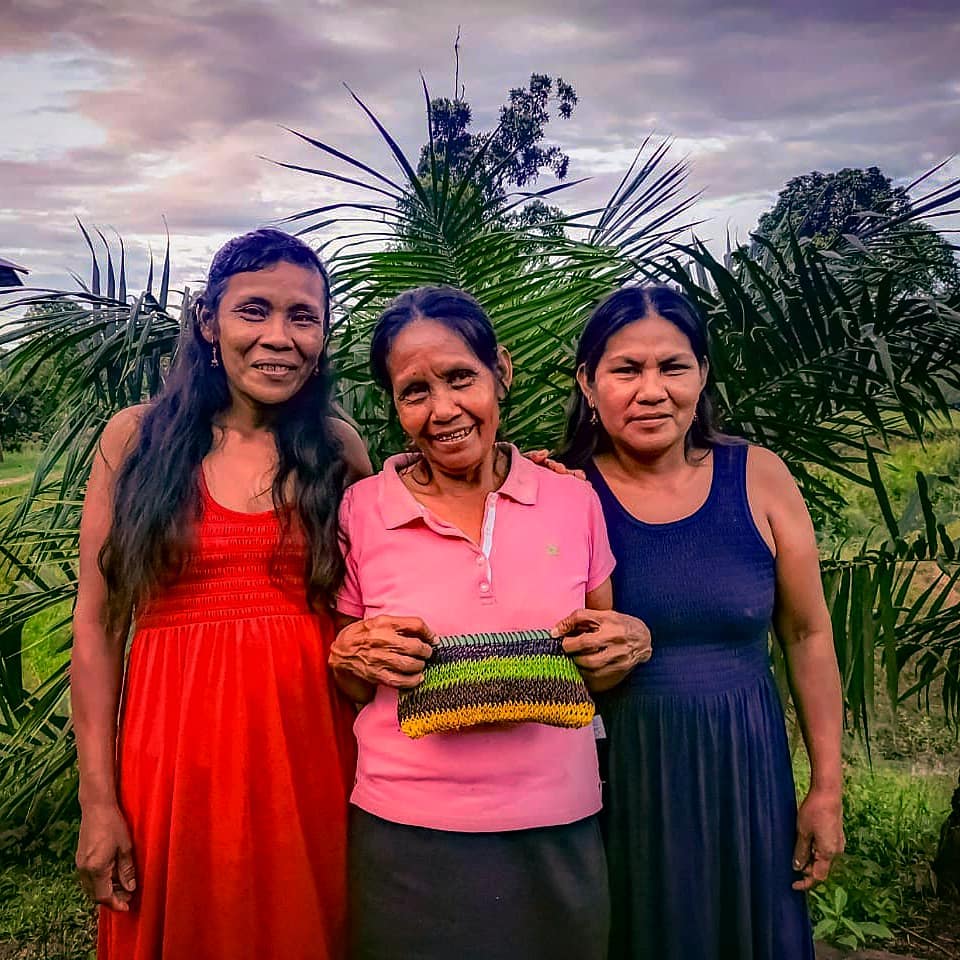
CACE Executive Director Campbell Plowden has been in Peru since June 14 and has accomplished a lot with our people working in the field. Highlights include: At Bora village of Brillo Nuevo in the Ampiyacu River region we renewed agreement to work with this Bora community. Artisans made first batch of jungle snake-pattern dog leashes, collars, and bracelets with chambira palm fiber. We also documented use of ten plants as natural dyes for chambira, began monitoring recovery of copal resin on trees harvested last year, and began survey of chambira palm trees used to make handicrafts. Made new agreements to work with Bora, Huitoto, Ocaina and Yagua native artisans in Nueva Esperanza, Puca Urquillo and San José de Piri. They are now making first batch of Christmas tree ornaments, coin purses, and cell phone holders with chambira, bonbonage and bacaba palm fibers. At Jenaro Herrera we reviewed development of new traps to study weevils associated with copal resin and scoped out site for new round of harvest studies, helped local artisans take first step to create a formal association, commissioned them to make six new designs of holiday ornaments, and consulted with senior staff from the public school and health clinic about their priority needs. We also bought $466 worth of supplies for these institutions with the social rebate from past sales of handicrafts from these artisans and funds raised by Xinxin Xue – a Canadian woman who became passionate about helping this little Amazon town during her visit there. We will soon renew a three year cooperative agreement with the Institute for Investigations of the Peruvian Amazon (IIAP) and are working with the National University of the Peruvian Amazon (UNAP) to deposit our plant and insect samples collected in the Ampiyacu region. Congratulations to our Jenaro Herrera project manager Angel Raygada who successfully defended his undergraduate thesis at the UNAP Dept. of Agronomy for his work with copal. On the personal side, Plowden had a Bora artisan friend dye his hair with a concoction of huito leaves. See photos and full accounts of these stories on Plowden’s blog: Campbell’s Amazon Journey.

New Amazon guitar straps for sale

Amalia with guitar strap
The Green Drake Gallery Amazon guitar strap
One fruit of our closest collaboration with a partner community has been the creation of an Amazon guitar strap woven from chambira palm fiber with beautiful earth tones into creative patterns of jungle snakes. The artisans in the Bora native community of Brillo Nuevo in the Ampiyacu River region of Peru produced the first prototypes in 2010 in response to a request by a musician from Millheim, PA. Various models are now available for sale through CACE and at the State Theatre in State College at select concerts and through their box office. The Green Drake Gallery and Arts Center in Millheim, PA is the newest sales outlet for select models of the Amazon guitar strap. Visit our Facebook page to see photos of Amazon guitar straps in stock. Our photo gallery also has pictures of some straps, artisans and buyers. See the full story about these guitar straps in our new Amazon Guitar Strap brochure.


Copal Resin Research Advances in Peru

Copal manual harvest
resin weevil transplant

The Center is making progress in our copal resin research at the Jenaro Herrera research station operated by the Institute for Investigation of the Peruvian Amazon (IIAP) on the Ucayali River. In March, we finished a two year study on the manual harvest of resin from three species of copal trees in a plantaion and section of natural forest. Resin yield from this method (photo on left) was lower than hoped, so we are continuing to study how to sustainably harvest resin lumps formed by a group of bark-boring weevils. One key to this is monitoring trees that were harvested in 2007. Project manager Angel Raygada is analyzing several thousand digital photos of resin lumps at different stages of growth to estimate how long these weevils take to mature and how many years it will take for the amount of resin on the trees to recover. Thanks to collaboration with Dr. Paul Fine the University of California at Berkeley, DNA testing indicates there are at least six species of weevils that stimulate resin flow from copal trees just in this region of Peru. We hope to expand our work with Fine's lab to analyze the chemical components in the resin from various copal species to learn more about the evolutionary and ecological relationships between these weevils and their tree hosts. We have just started a small-scale experiment in a copal plantation to see if a young weevil larva in a lump can be successfully transplanted (see photo on right). These tests will help us understand why weevils only attack some copal trees and may give us a tool to increase the amount of resin in a forest that can be harvested by people.

Paul Fine examining copal leaves
Bora carrying leaves
In the Ampiyacu River region, project manager Yully Rojas and local coordinator Rolando Panduro we have been conducting monthly surveys of different forest areas around the Bora village of Brillo Nuevo. They have been searching and marking a wide variety of copal species and other plants (such as "canela moena" trees and "clavo huasca" vines) that may also yield useful aromatic materials. In July we brought an expert climber from Jenaro Herrera to Brillo Nuevo to teach seven Bora men how to collect leaves from tall trees with a harness, curved spikes, and a long pole-pruner. These leaves will be identified by Paul Fine and his colleagues so we can distill a separate batch of resin from each species. We will then send these samples of copal oil to our company partner L'Oeil du Vert in Los Angeles to evaluate their potential use in fine fragrances. This project is also being supported by the Rufford Small Grant Foundation and Marjorie Grant Whiting Center. Thanks to Center board member Michael Gilmore who has worked extensively with Maijuna native people in the Napo region, we received approval in August from their federation (FECONAMAI)to help Maijuna communities develop copal resources and other non-timber forest products when we secure funding.

Amazon Connections Newsletter - Summer 2010

             Download the original PDF version
Amazon Connections Issue 3 cover

See updated versions with extra photos on the new Center for Amazon Community Ecology Blog

- New markets, opportunities for copal and crafts (updated version): Natalya Stanko and Campbell Plowden present highlights of the Center's research on copal resin and making a fragrant essential oil, developing innovative handicrafts with Bora natives and exploring connections with Maijuna communities in Peru, and Plowden's return visit to Ka'apor and Tembé Indian villages ten years after working with them in Brazil. See updated version with extra photos on the CACE Blog.
- Artisan Spotlight (updated version): Meet two of the Center's artisan partners - Monica Chichico from the Bora native community of Brillo Nuevo and Romelia Huanaquiri from the Huacamayo Handicraft Committee in Chino.
- Connections Profile (updated version): Dr. Dennis del Castillo - from son of slash and burn farmer to top investigator with the Institute for Investigation of the Peruvian Amazon (IIAP). He know seeks solutions to conserve the Amazon's threatened biodiversity and support its rural people
- Gilmore: Connecting plants and people (updated version): Ethnobotanist Michael Gilmore discusses the challenges being faced by the Maijuna native people in Peru and some things he has learned working with them for eleven years
- Amazon Field Volunteer in Action (updated version): Natalya Stanko spent six weeks in Peru with the Center and interviewed many of its artisan partners. She wrote about her experiences in many formats and wrote most of the articles for this issue of Amazon Connections. Read her fully illustrated version of "What makes a journalist?" and her recent story Amazon Trip in Greeniaks.com.
See previous issues of Amazon Connections or subscribe to the newsletter

Volunteers making a difference

PSMA group

Students from Penn State University are helping the Center with their skills and time with photography, video, graphic design, marketing, writing and research. See Profiles of Current and Past Interns and Key Volunteers

.
Subscribe to the newsletter
Donate to the Center

CACE seminar on the web
Campbell Plowden with Bora woodsman from Brillo Nuevo
CACE founder Campbell Plowden gave a talk titled "Blending science, traditional knowledge, and creative design" sponsored by the Interinstitutional Consortium for Indigenous Knowledge at Penn State's Paterno Library on Feb. 23. Watch and listen to Dr. Plowden's seminar and audience questions recorded by University Libraries.

Also see the CACE cover story of the summer 2011 ICIK E-News for an article by Plowden with the same title.

CACE on Facebook
We have two pages on Facebook to share extra stories and photos. Please check out the CACE non-profit organization page and "Like" if you do. We also encourage you to check out and join our CACE group page to share your thoughts about our work and other things happening in the Amazon.
Reports from the Field
Angel and beetle Angel Raygada, field manager for the copal project in Peru, reports on the study and encounters with rain, wildlife, and assorted bugs. See Angel in the Amazon (English) or Angel en el Amazonas (Spanish).
Campbell and monkey Campbell Plowden, Center President, presents reflections on Amazon travel, people, critters and jungle lore in Campbell's Amazon Journal. Check out Campbell's other updates on Facebook.
Natalya Stanko Natalya Stanko, shares experiences and lessons about her six weeks in Peru as an Amazon Field Volunteer writer with the Center in her essay What makes a journalist and 37 more stories in Natalya's Amazon Log.
Videos about Copal Project and Amazon Handicrafts
Learn more about the copal project in the videos:Amazon Ecology (Part 1): Use and insect ecology of copal resin in the Peruvian Amazon and Amazon Ecology (Part 2): Sustainable harvest and marketing of copal resin in the Peruvian Amazon.Plowden and Bora leader with alembiqueronsapa bees at resin Peruvian Amazon Handicrafts: People, Plants and Community Support features craft makers from two of the Center's partner communities: the town of Jenaro Herrera on the Ucayali River and the Bora native community of Brillo Nuevo in the Ampiyacu River region. It shows ways that people use diverse plants to make their handicrafts and how the Center is supporting local schools by returning part of the proceeds of these crafts sold in the U.S. The piece was shot and produced by cinemaphotographer Greg Harriott when he was an Amazon Field Volunteer with the Center in 2008. Also see Greg's Introduction to Jenaro Herrera and Handicrafts of the Peruvian Amazon by video intern Matt Hunter.
Dora with achiote podsSchool supply donation in Jenaro Herrera